Welcome Attorney Bruce Frederick to McDonough Law Group

Welcome Attorney Bruce Frederick to McDonough Law Group

Bruce Frederick

Welcome Attorney Bruce Frederick to McDonough Law Group

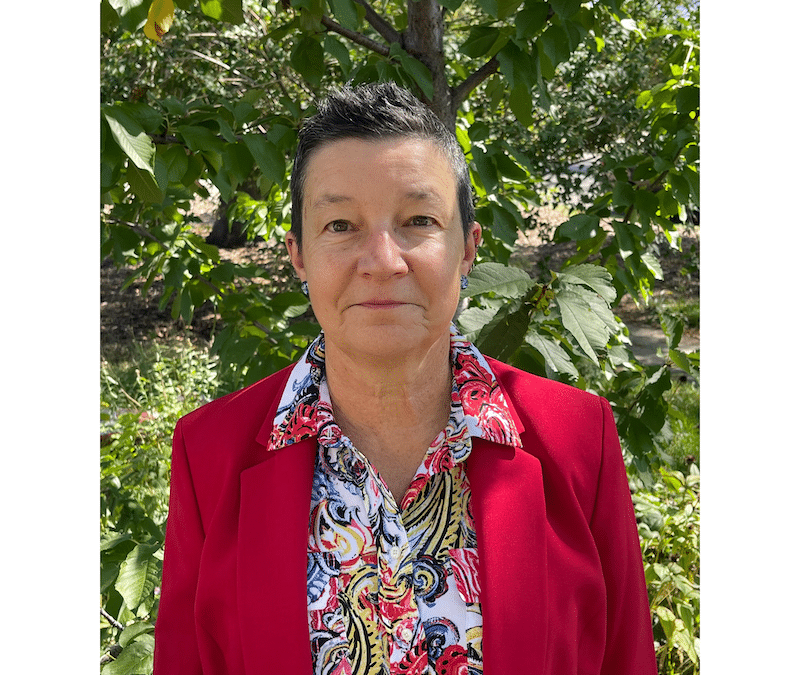
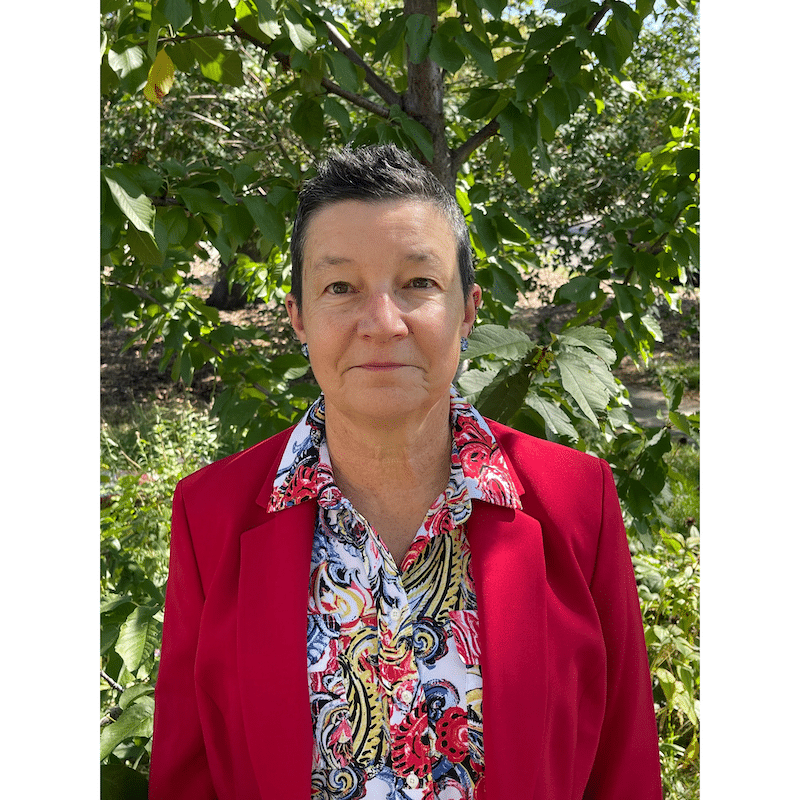
McDonough Law Group is delighted to welcome Attorney Bruce Frederick to our team. Bruce brings a wealth of experience in water law, natural resources law, and environmental law, complemented by extensive experience in land use, contracts, and property law. Throughout his career, Bruce has adeptly served a diverse clientele that includes private individuals, corporations, governmental entities, and non-profits, consistently demonstrating his commitment to meeting a broad range of legal needs.

Licensed in both New Mexico and Colorado, Bruce’s ability to navigate complex legal landscapes is enhanced by his unique educational background in geology (BS) and groundwater hydrology (MS), providing him with a distinctive perspective that bridges the gap between law and science.

Bruce’s arrival at McDonough Law Group strengthens our ability to make a meaningful impact for our clients in New Mexico and Colorado while enriching our team with his vast experience and dedication to environmental law. We are excited about the depth of knowledge and commitment Bruce brings to our practice and look forward to the ways he will help us continue to serve our clients and communities.

Welcome aboard, Bruce!

We Welcome New Legal Talent Kirsten M. Kurath and Honor the Legacy of Williams, Turner & Holmes, P.C. of Grand Junction, CO

We Welcome New Legal Talent Kirsten M. Kurath and Honor the Legacy of Williams, Turner & Holmes, P.C. of Grand Junction, CO

Shelby Highes

We Welcome New Legal Talent Kirsten M. Kurath and Honor the Legacy of Williams, Turner & Holmes, P.C. of Grand Junction, CO

Exciting news for McDonough Law Group as we warmly welcome attorney Kirsten M. Kurath to our team. Kirsten’s arrival from Williams, Turner & Holmes, P.C. (WTH), a firm with a history dating back to 1882 in Western Colorado, signals an expansion of our legal experience and services. This integration not only enriches our firm with the legacy and traditions of WTH but also fortifies our commitment to serving the Grand Junction and Western Slope communities with unparalleled legal support. The closure of WTH marks the end of an era, but also the beginning of a promising new chapter with McDonough Law Group. Kirsten’s dedication to providing personal attention aligns perfectly with our core values, promising continuity of service and a deepened level of experience in our offerings.

Kirsten Kurath is licensed in Colorado and Utah and has extensive experience in water law, real estate, and general practice. She has effectively represented a diverse clientele ranging from energy companies and irrigation districts to individual water users, skillfully navigating complex disputes and water court applications. Her legal practice also covers a wide spectrum of areas including estate planning, special district law, construction, and employment law.

We look forward to the enriched legal solutions that Kirsten will bring to our existing and future clients. Together, we are set to continue a tradition of legal excellence and community service that has been the hallmark of both McDonough Law Group and WTH. Welcome aboard, Kirsten!

3 Tips Every Business Owner Should Know About Trademarks

3 Tips Every Business Owner Should Know About Trademarks

Happy family enjoying beautiful mountain view on vacation hiking trip.

3 Tips Every Business Owner Should Know About Trademarks

By: Shelby N. Price, Trademark Attorney

Trademarks provide brand recognition for your goods/services and are noted by either the signature circle R (®) or TM/SM, depending on where you are in the application process. A trademark gives you ownership of your brand on a national level. If you have a logo, business name, slogan, or tagline that is unique to your business, here are 3 valuable tips on how to protect your brand with a trademark.

  1. Your business entity (LLC, Corporation, Partnership, etc.) does not have to be formed before filing an application for a trademark. Forming a business entity only gives you the right to do business in that state and does nothing to protect your brand. If your brand is already in use, trademarks can be applied for as an individual and later be assigned to your business entity after it is formed. Registering your trademark before developing your brand could prevent costly future litigation and rebranding of your company.
  2. Slightly changing a trademark does not eliminate likelihood of confusion. Changing the spelling of a name, adding a word, or deleting a word are slight changes that will likely not resolve any problems your trademark has with an existing trademark. If there is a likelihood that your trademark could be confused with another’s, and you are in the same industry, your trademark application may be rejected. Conducting a trademark clearance search is highly recommended to detect potential obstacles in the application process.

  3. Purchasing a website domain name does not give you ownership of the business name. Domain names only give you the right to host a website at that address. Mere availability of a domain name does not mean you will not have an issue with an existing trademark.


Navigating the world of trademarks can be complex, but it’s essential for protecting your brand. As a Trademark Attorney, I’ve shared three key tips to help you understand the importance of trademarks for your business. If you have any questions or need guidance on how to safeguard your brand, please feel free to reach out to me, Shelby Hughes. I’m here to help you through the trademark process, ensuring your brand is well-protected and positioned for success.

What is an Estate Plan?

What is an Estate Plan?

Happy family enjoying beautiful mountain view on vacation hiking trip.

What is an Estate Plan?

By:  Marc E. Summers, Esq. 

What is an Estate Plan and why do I need one? What is a Will, what is a Trust? I get these questions frequently. 

Simply put, an Estate Plan is a bunch of documents that do legal stuff…. easy enough, right? But what really is an Estate Plan and what does it include? An Estate Plan encompasses your legal documents, your insurance policies, your investments, and other pay-on-death assets (and helps to make sure they all work together to accomplish your end-of-life goals). 

On the legal side, an Estate Plan is a series of documents, which include a Will and/or a Trust, that accomplish multiple things, from instructing how you want your property distributed upon your death and the nominating the person you want to be in charge of your property when you pass (called an “Estate”); to granting powers to other people, if you become incapacitated, to act on your behalf. 

An Estate Plan generally has four or five main documents: The Trust and/or Will; Property Power of Attorney; Medical Durable Power of Attorney; and the Advanced Medical and Surgical Directive (often referred to as a “Living Will”, but I call it the “Pull the Plug” document for levity and factual accuracy!). 

Why do I need an Estate Plan? My three main reasons for having an estate plan are:

1. A Will or Trust is your set of instructions regarding how you want your property distributed at your death. You are in charge of saying who gets what, or who gets nothing (I have left everything to my dog because my kid really likes surprises!). For example, you can instruct charitable giving; giving to friends, other family members, grandchildren, your favorite attorney, and, importantly, making sure your pets or livestock are taken care of after you pass away. You decide where your property goes, not some law established by the State of Colorado (which does control under circumstances when someone dies without a Will, which is called “Intestate”). Under Colorado laws regarding intestacy, your property might end up with someone you didn’t want to have it if you do not have a Will. A Will or a Trust ensures your intent is followed after your death. Furthermore, having a Will or a Trust can help to prevent your adult children (or whomever you put in charge of your Estate) from dealing with a potential mess.

2. If you have minor children and something happens to you and your spouse – who will raise them? In your Will you nominate who you want to be the Guardian of your minor children in the event you and your spouse pass away. By nominating a Guardian in your Will, you are informing a judge of who you want your child to live with and be raised by. Without your instructions, a judge must make a decision based upon what the judge believes to be in the best interest of the child – which could mean your in-laws, your brother who still lives in a basement, some distant relative. The worst cases see a “Grandparent War” in that both sets of grandparents end up in court litigating for Guardianship. Remember, your child is dealing with the death of their parent or parents, now they are thrust into the middle of their grandparents fighting over them and potentially being unsettled further during a time of tremendous grief and uncertainty. Make a Will and nominate the Guardian.

3. You only get to die once, but your opportunity to become incapacitated is unlimited. If you are in an accident and cannot make decisions for yourself (let’s, say you are unconscious and cannot make medical decisions) a power of attorney allows someone you trust to make decisions for you both concerning your property and your medical. I get this response frequently – “If I am unconscious or can’t make decisions, my spouse can make the decisions” – this is true to a point, however, think of how often you and your spouse are in a vehicle together. What if you and your spouse are in the same car accident and you are both unconscious? Who makes the decision then? Under the Medical Power of Attorney, you nominate backups to act on your behalf if your spouse cannot – just in case something like this happens. Generally, you nominate your spouse as your primary agent, then an adult child (that you trust to do a good job!), if you have one, or trusted friend or relative if you do not have a child you trust – it happens. The people you nominate to act on your behalf regarding your medical decisions or your property are called “agents.” They are subject to what is called a fiduciary duty, which is imposed by law. If they are not acting in your best interest, you or your family can have them removed, or even sue them if necessary – you never know, they make movies about this kind of stuff because it happens. Pick the person who is going to do the best job. If your adult child cannot manage their own finances, they can’t manage yours!

August is Make a Will Month, so it must be important if it has its own month. If this all sounds overwhelming, take a deep breathe, it really isn’t that bad. We can help. If you have been thinking about getting your “affairs in order,” let McDonough Law Group help you. Our attorneys will work with you to create an Estate Plan that works for you to accomplish your goals, and one that you actually understand!

Marc E. Summers, Esq.

Marc is an attorney with McDonough Law Group focusing his practice on Estate Planning, Probate and Trust Administration, Succession Planning and Business law. Marc is based in our Grand Junction, Colorado office and has been serving Colorado’s western slope since 2006.
View Marc’s LinkedIn profile.


Welcome Attorney Shelby Hughes to McDonough Law Group: A New Era in Trademark Protection

Welcome Attorney Shelby Hughes to McDonough Law Group: A New Era in Trademark Protection

Shelby Highes

Welcome Attorney Shelby Hughes to McDonough Law Group: A New Era in Trademark Protection

We are excited to announce the newest addition to the McDonough Law Group team, Attorney Shelby Hughes. Shelby brings a fresh perspective and experience relating to trademark law. Her focus on helping businesses protect their unique branding through trademark registrations is important for our business clients.  

Before joining our team, Shelby practiced family law and represented children as an attorney Guardian ad Litem in the State of Wyoming. This work showcased her commitment to justice and her ability to handle complex, sensitive cases with compassion and skill.

Shelby decided to pivot and concentrate on aiding businesses in establishing and safeguarding their trademarks. This transition was driven by her desire to assist companies in protecting their most valuable assets—their brand identity and intellectual property. Shelby’s move to trademark law underscores her versatility as an attorney and her eagerness to meet the evolving needs of the business community.

Shelby’s roots are deeply planted in Wyoming, where she was born and raised. She pursued her higher education in her home state, earning a B.A. in Spanish from the University of Wyoming, followed by her law degree from the University of Wyoming College of Law. 

For Businesses Looking to Secure Their Brand

Shelby’s trademark experience is crucial for businesses at any stage—whether you’re a startup looking to establish your brand, or a company aiming to protect and expand your market presence. Understanding the importance of trademark registration in the competitive business landscape is key, and Shelby is here to guide our clients through every step of the process. From initial trademark searches and filings to handling potential infringements, she is dedicated to ensuring your brand remains uniquely yours.

Looking Forward

We are thrilled to have Shelby Hughes on board and look forward to the experience and energy she brings to McDonough Law Group. Her addition represents our firm’s commitment to providing comprehensive legal services to our clients, particularly in trademark law. To learn more about how Shelby can help protect your business’s brand or help you navigate the complexities of trademark registration, schedule a consultation with Shelby or visit our website to learn more.  

Everything is Negotiable: Caution and Contracts

Everything is Negotiable: Caution and Contracts

Caution and Contracts

Everything is Negotiable: Caution and Contracts

It may be easy to click the box, indicating you’ve read the fine print online, but Scott Slawson, McDonough Law Attorney, suggests a bit more caution, especially in contractual agreements regarding your business.

He has heard many clients insist that contracts are “merely boilerplate,” but said when another party is penning the contract; they’re adding clauses to the contract they desire that might not always be in the best interest of all involved.

“It may be words used in typical contracts, but all elements are negotiable,” he said.  

Slawson recommends thinking through the contract, considering the amount of investment at stake, and thinking through potential challenges and the results if a lawsuit were to be filed. Every contract should be reviewed by a litigator, because they have seen numerous challenges to contracts in court.  He reviews contracts with his litigation experience at the ready and suggests changes like requiring the other party to carry insurance that can serve as an ounce of prevention to avoid disaster. 

“I like to work proactively with businesses to deal with risk mitigation,” he said. “We’ll have people come in and present a contract saying it’s just boilerplate. Nothing is boilerplate. People put things in contracts for reasons, and if it’s not your contract, someone else has written that contract to include things they want and to leave out things they don’t want.”

Everything in a contract, he said, is negotiable, and signing one on the assumption that it’s “boilerplate” can cause serious problems in the future. And an outright failure to have a contract, he said, is something that astonishes him but happens with relative frequency and has led many companies and businesses to seek his counsel.

“When you leave yourself open to that sort of situation, it could be ugly if something goes wrong,” he said. “Inevitably, if you are in business for long enough, something will go wrong whether or not it’s your fault.”

Protecting everyone involved through contracts is critically important for businesses and individuals. Business partners also ought to have contracts and details spelled out in the controlling documents of a company to avoid fallout and disaster if the unforeseen occurs.

If you need a contract written or reviewed, please schedule a consultation with us today.